
Warren County Churches
This page contains information and pictures of many of the churches located in Warren County, KY. If you have information or pictures of other churches in Warren County that you would like to share, please contact us.
| Church Name | Date Built | Description | Photo |
|---|---|---|---|
| Antioch Church | Late 19th century | The abandoned Antioch Church is perched on high ground near the Allen County line. The church displays traces of Greek Revival styling with cornice returns, corner pilasters, and a raking cornice. The rectangular mass is clad in clapboard siding and features four symmetrical 4/4 elongated windows. The building rests on limestone piers and is topped with a rusting, standing metal seam roof. A red brick chimney pierces the roof on one side. The entry's double doors were hung with strap hinges. This picturesque structure is near its demise. | |
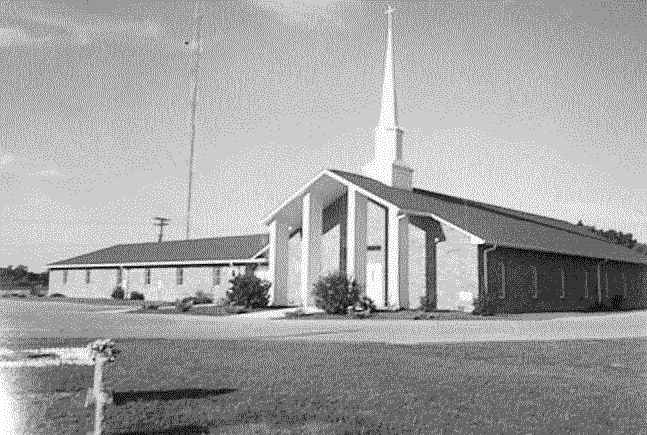
| Barren River Baptist |
|
||
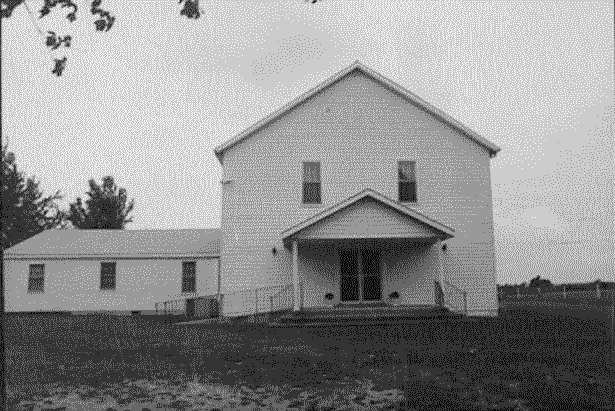
| Bays Fork Missionary Baptist Church | 1891 | The Bays Fork Church was constituted on July 5, 1862, but an earlier church by the same name has been identified as early as 1810 in the county. A log building that was probably constructed shortly after 1862 predated the present structure. In 1891 the church united with the local Masonic order and the nearby chapter of the Farmers Alliance to build the present structure. The main mass of Bays Fork is two stories and the front boasts a double-door entrance protected by a gabled portico and two 6/6 windows on the second floor level. In 1927 the Masons relinquished use of the second floor. |
|
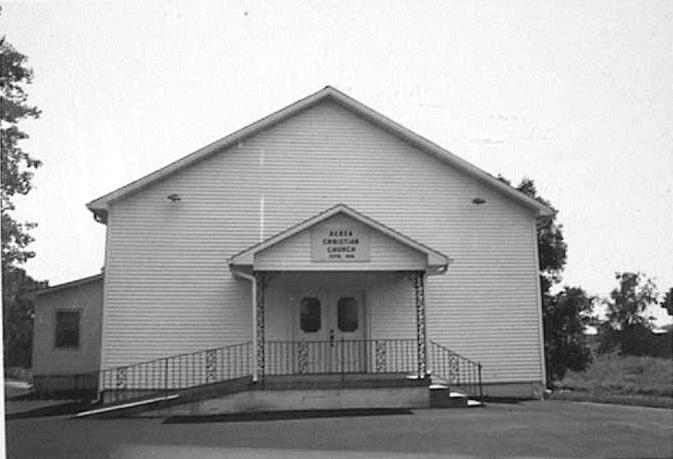
| Berea Christian Church | 1870 | Berea Christian Church began in the early 1840s. Congregation members met in homes until property was purchased in 1845 and a log structure constructed. The church purchased another site in 1870 and erected the present building. Until 1965 the building boasted the two front doors so common to rural churches in the area. Besides remodeling the front entrance in 1965, the church also added a ground floor fellowship hall and three first floor classrooms. The church cemetery is located to the proper right of the church; its earliest marked grave is dated 1871. |
|
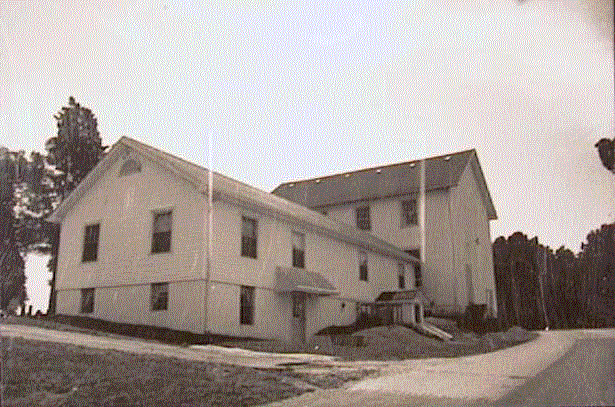
| Bethany Baptist Church | 1868 | Organized on February 26, 1848, Bethany is sometimes referred to as the Goshen Church, because the congregation first worshipped in the nearby Goshen schoolhouse. After worshipping in a log building, the present structure was built in 1868 at a cost of $1818. To preclude turmoil in the years preceding the Civil War the congregation agreed "that there shall not be any political or public speeches made in the meeting house." Bethany allowed the local Masonic order "to build a hall over the church" in order to raise money for the building. The church's entrance has unusual decorative details, including an urn atop a pedimented portico trimmed with dentil molding. |
|
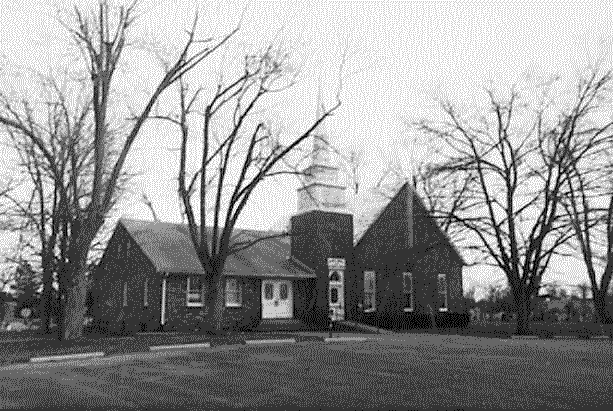
| Bethel United Methodist Church | Late 19th century | Bethel is one of Warren County's more picturesque churches. The sanctuary is situated to the proper left of the bell tower and is distinguished by Gothic arched windows and a steep-pitched standing metal seam roof. The bell tower features a centered entrance with a Gothic arched transom. The cross-crested steeple features two graduated bases, with the bottom portion louvered. Originally covered with clapboard siding, the sanctuary features an attractive apse at the rear of the building. A cemetery envelops the church, and a picnic pavilion is located to the proper right of the main structure. |
|
| Blue Level Missionary Baptist Church | 1907 | Blue Level was organized in 1907 and a frame church soon constructed. This church has the distinction of having one of the longest pastorates in Warren County's history; Hubert Cooke served Blue Level from 1943 to 1964. During the early 1970s, the church added restrooms, remodeled the sanctuary and re-roofed and underpinned the building's western section. In the latter part of the 1970s the front vestibule with its unusual slit windows was added and aluminum siding installed. | |
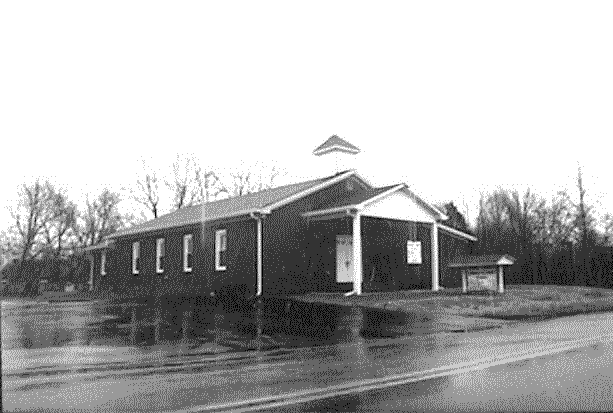
| Boiling Springs Church of Christ | Unknown | Perhaps built in the early part of this century, Boiling Springs' original meeting room is a rectangular mass with a rear addition, an added portico, and a shed-roofed addition on the proper left-hand side of the structure. The roof is capped with a cupola that may have housed a bell. The front portico protects a centered double-door entrance. A well-kept cemetery is located behind the building. |
|
| Boiling Springs General Baptist |
|
||
| Bowling Green Ward Church of Latter-Day Saints |
|
||
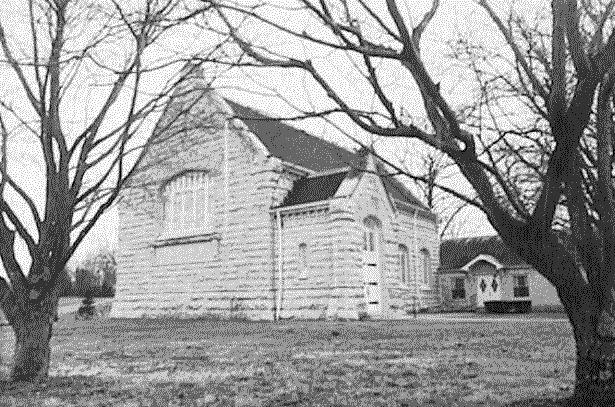
| Burton Memorial Baptist Church | 1911 | This church was built entirely by hand with stone quarried from nearby Drakes Creek. No machinery was used in constructing the church other than a derrick that was used to hoist the stone slabs in place. The same African American built the sanctuary in 1910 and the education building in 1950. Burton Memorial was the beneficent gift of William H. Burton, a millionaire lumberman and native of Warren County, in honor of his parents who were charter members of the Drakes Creek Baptist Church. The cornice, capstones, arched windows, and stone/wrought iron fence is a spectacular display of craftsmanship. |
|
| Calvary Church - Elrod Rd |
|
||
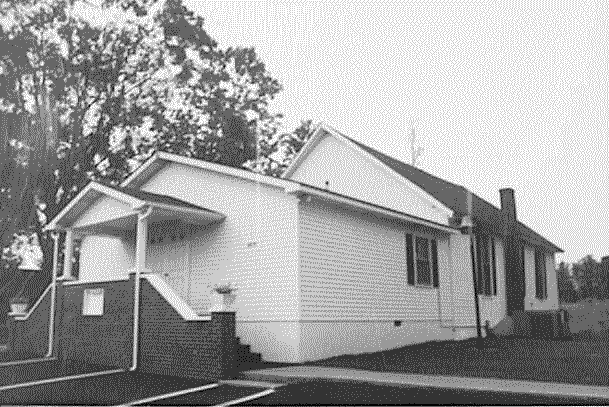
| Cassidy Free Methodist Church | Late 19th century | This church features something know as telescoping, where graduated additions are constructed in the front or rear of a building. The sanctuary with 6/6 aluminum casement windows, a steep-pitched roof, and an apse on the rear, rests on cut stone piers, several of which are visible around the building's perimeter. A bell used to call members to worship stands to the proper left of the sanctuary. The proper left also features a freestanding brick chimney. |
|
| Castle Heights Church of God of Prophecy |
|
||
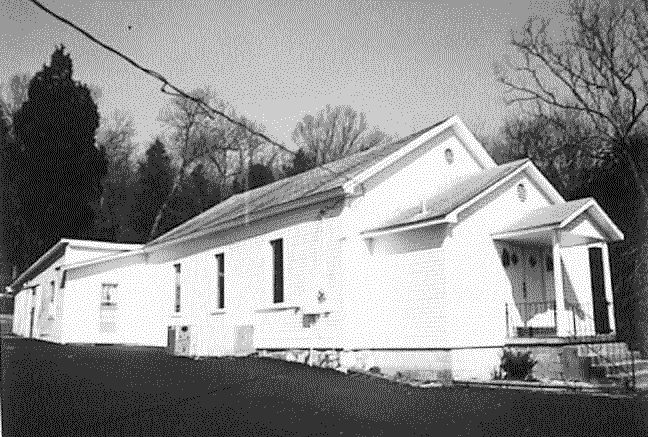
| Cedar Bluff Baptist Church |
|
||
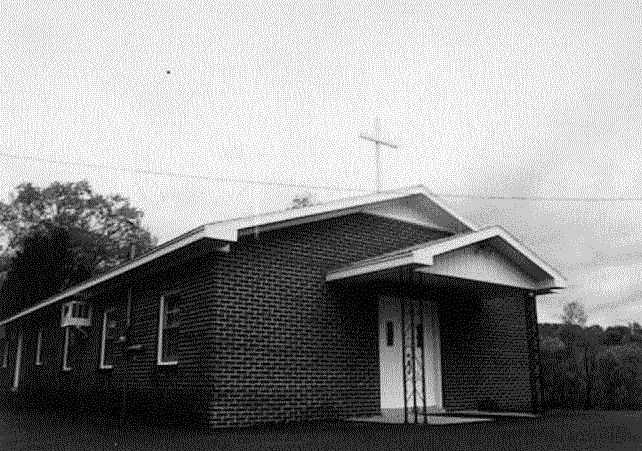
| Cherry's Chapel Church |
|
||
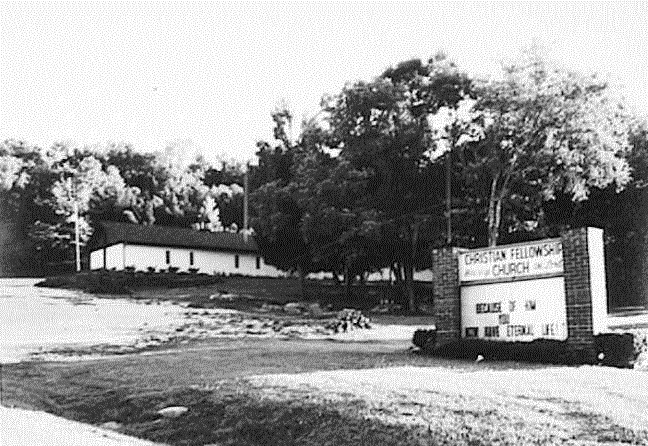
| Christian Fellowship Church |
|
||
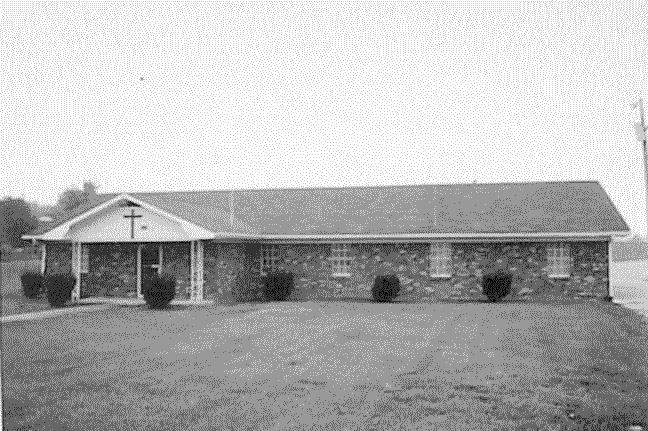
| Church of God Bristow |
|
||
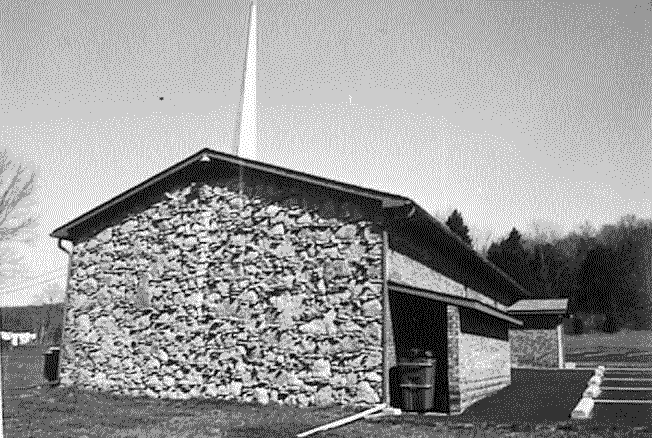
| Church of God Morgantown Road |
|
||
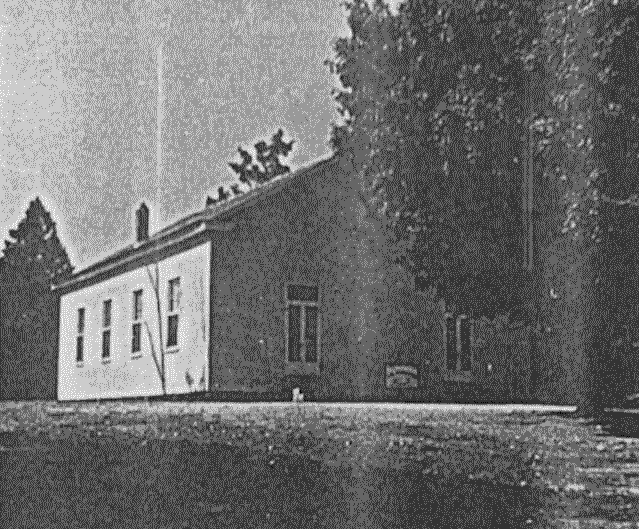
| Clear Fork Baptist Church | 1872 | Clear Fork Baptist Church was founded in 1833 through the efforts of David L. Mansfield, pastor of Providence Knob Baptist Church. The congregation, which consisted of twenty-two white and eleven African American members, worshipped in a log structure from 1833 to 1872 when a frame sanctuary was constructed. Interestingly, the church disbanded and remained closed from 1929 to 1933. Since 1967 the church has built and expanded its fellowship hall, added two two-story education wings, completed the vestibule and education space in front of the 1872 church, built a parsonage, sheathed the entire structure in brick veneer, and erected a steeple. |
|
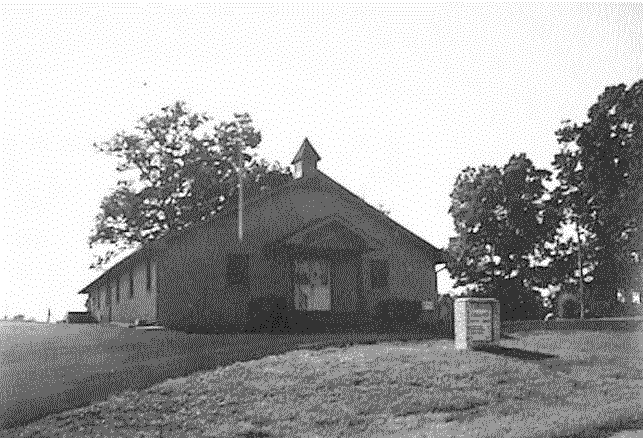
| Cowles Chapel Missionary Baptist Church |
|
||
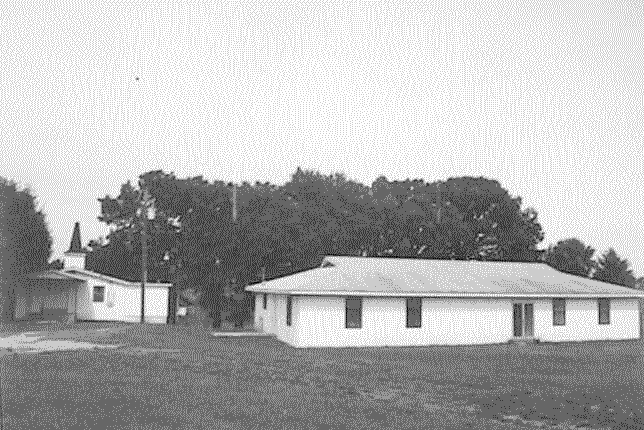
| Dedicated Baptist Church |
|
||
| Fairview United Methodist Church | 1892 | Perhaps no name better fit a church building than Fairview. Because of its sitting on a flat,
intensely cultivated plain, it is a visual focus on the landscape for miles around. The projecting
centered bell tower is capped with a lovely metal-shingled steeple accentuated with four peaked vents
and topped with an attractive finial. The front entrance is centered in a projecting tower and is capped with a peaked tripartite transom with a handsome hood mold. Four symmetrically proportioned windows on both sides of the sanctuary are also topped with peaked hood molds creating a rhythmic pattern from the steeple to the first floor. |
|
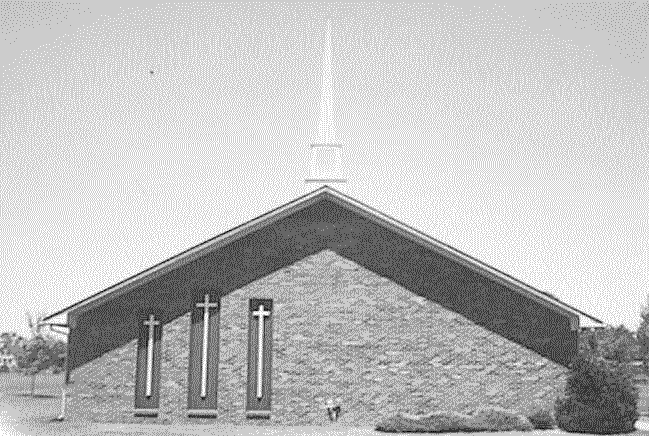
| Fairview Missionary Baptist Church |
|
||
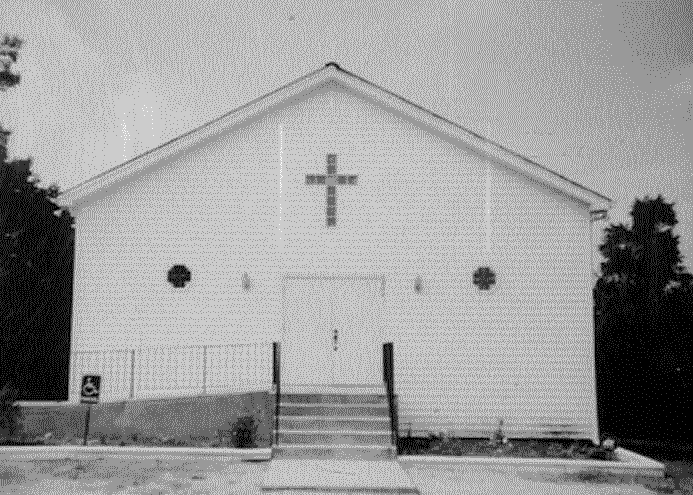
| First Baptist Church Richpond |
|
||
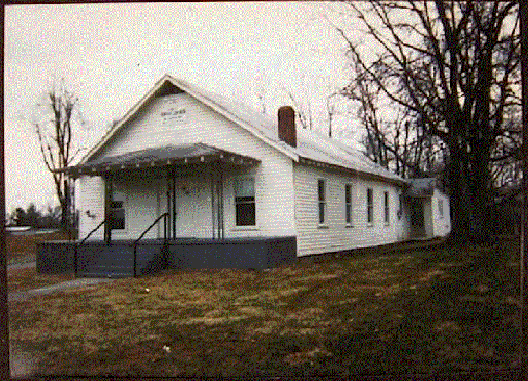
| First Baptist Church Woodburn |
|
||
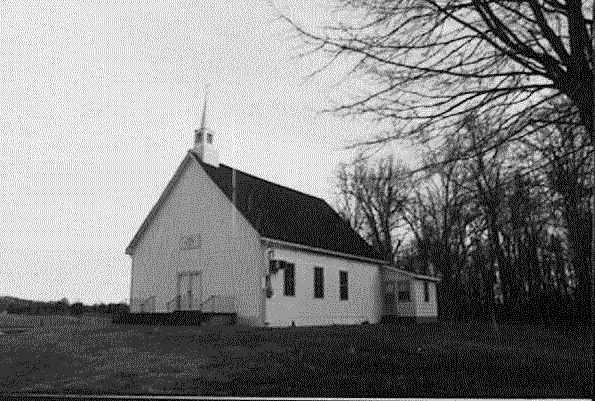
| Flat Rock United Methodist Church | Late 1890s | Flat Rock Church was established on November 9, 1885. The building is a traditional church design with a front gabled entrance, steep-pitched roof, and symmetrically placed windows on the sides of the sanctuary which contain wavy amber glass. The cross-crested steeple is a later addition to the building. One of the church's distinguishing features is a round window found in the rear gable which uses red, blue and amber glass. A door in the rear gable indicates that the attic area was once accessible and possibly used by a fraternal organization. |
|
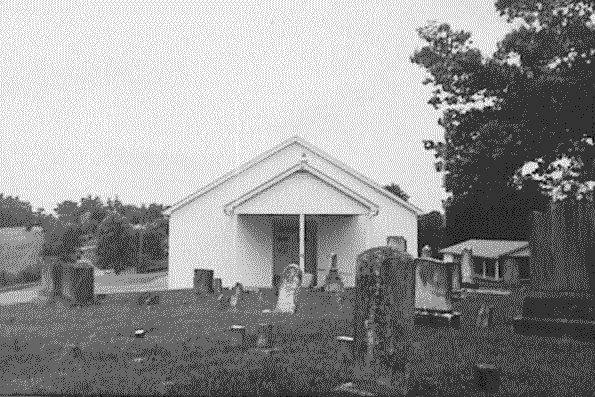
| Friendship Baptist Church | 1910 | Friendship Baptist Church has antecedent congregations that were known as Doughty's Creek Church (1829-1846) and Elk Spring Church (1846-1854). It has been known as Friendship Baptist Church since 1854, and has been at its present location since that time. It's first building burned in 1910. Additions to the present building have created a very complicated roofline, but the original sanctuary's outline is still visible. One of its more unusual features is the projecting bay that serves as the entrance to the structure and a similar bay at the rear of the structure that acts as an apse. Centered in the apse is an exquisite stained glass that features a green bow and a red heart. |
|
| Friendship Community Church | 1858 | This church has antecedents back to 1810. The church used a pole building until a log structure was erected in 1835. The present sanctuary which was built with slave labor, dates from 1858 and has been altered significantly since that time. The Civil War split the church, with the Union sympathizers forming Fairview Methodist Church. The Friendship Methodist Church was closed in 1951. In 1958 a revival was held in the building and the next year the non-denominational Friendship Community Church was organized. The cemetery has been in use since 1865. | |
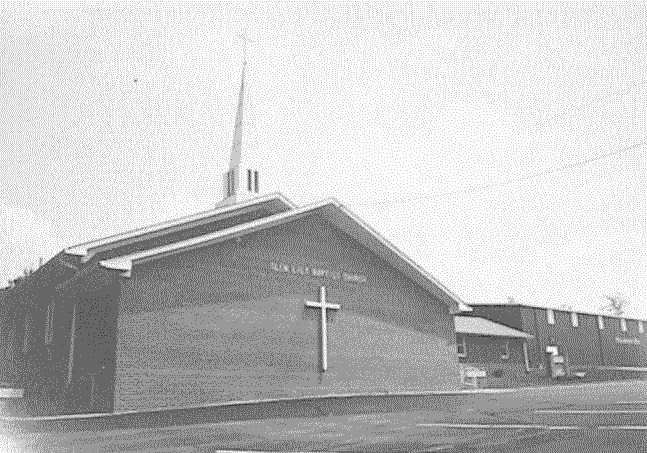
| Glen Lily Baptist Church |
|
||
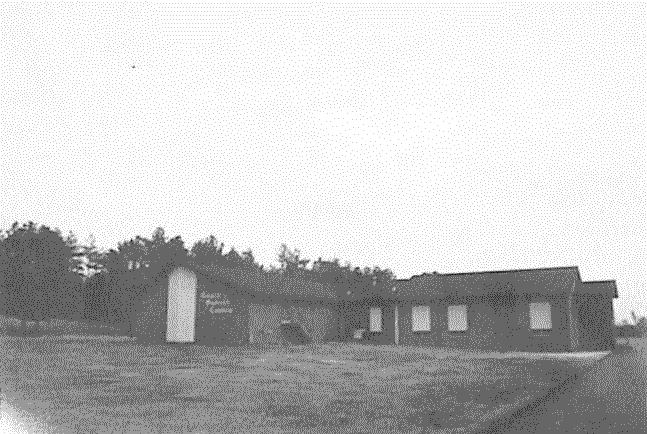
| Grace Baptist Church |
|
||
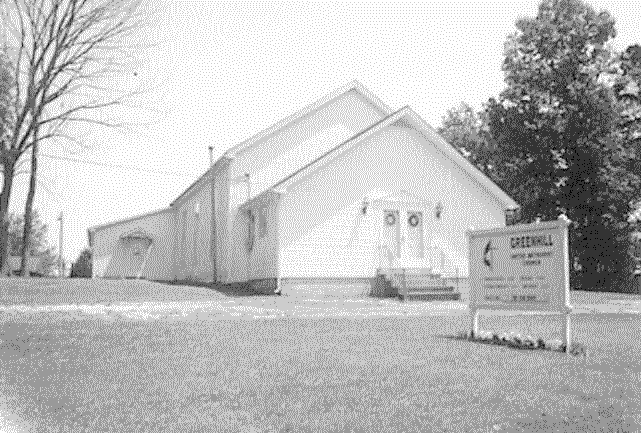
| Green Hill United Methodist Church |
|
||
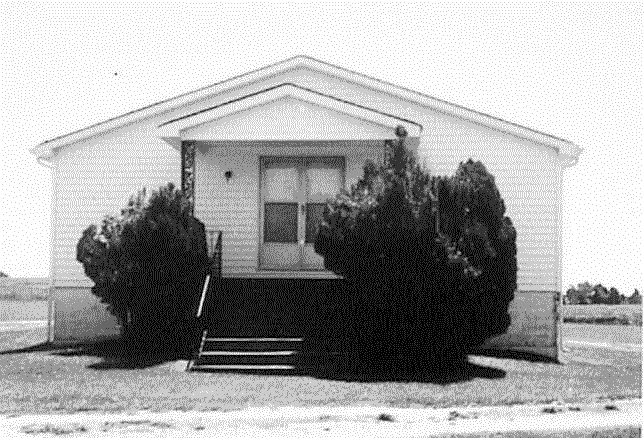
| Green Meadows United Baptist Church |
|
||
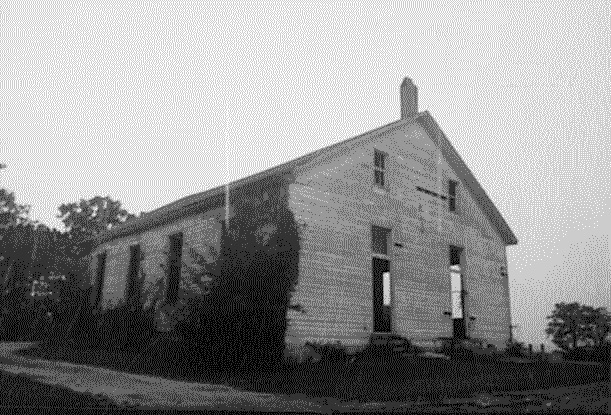
| Green River Union Meeting House | 1845 | Perched atop a picturesque hill near Richardsville, the Green River Union Meeting House lingers from neglect. Built in 1845 by Huguenot descendants, this church is constructed of yellow poplar and features two entrance doors in the front gable. A large transom crowns each door. Above each door is a double-hung window at the attic level. A chimney pierces the roof's ridge near the front of the building. Each side of the sanctuary features elongated windows with simple framing. The congregation dates from the early 19th century and is one of fourteen Huguenot shrines in the country and the only one in Kentucky. |
|
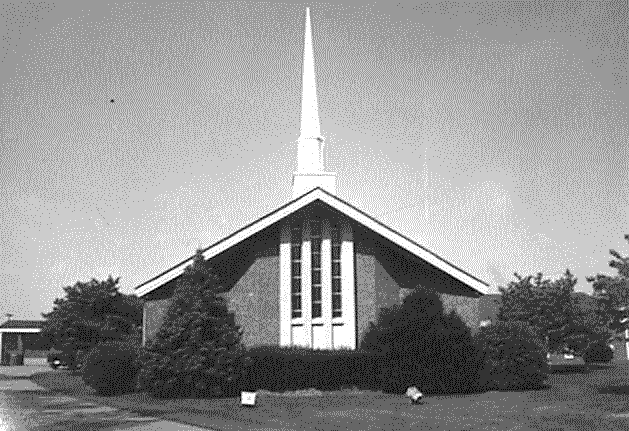
| Greenwood Baptist Church |
|
||
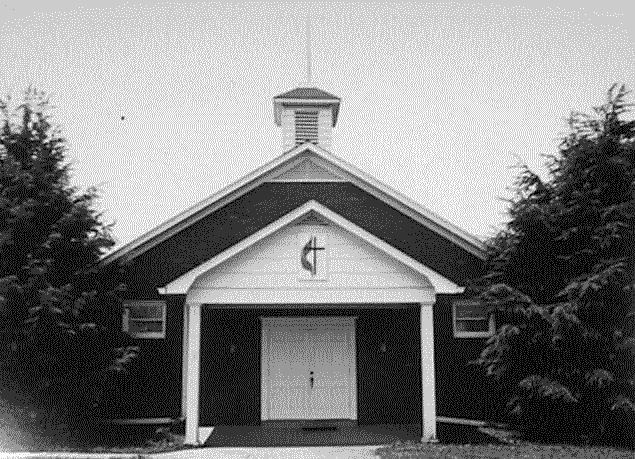
| Greenwood United Methodist Church |
|
||
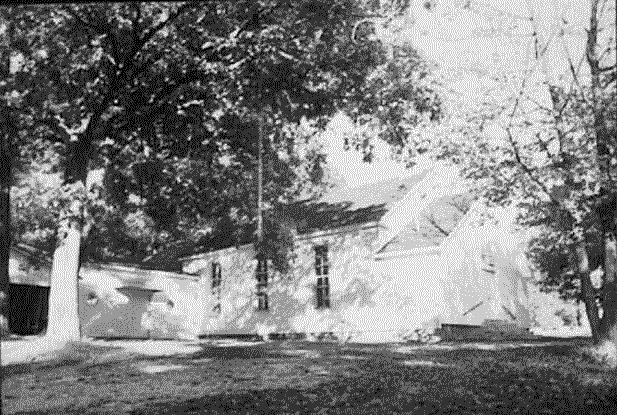
| Halls Chapel Baptist Church | 1858 | This church's original rectangular sanctuary is easily distinguishable with its elongated 4/4 windows. Older photographs of the building display the common double entry doors (one for males and one for females) with a name placard placed symmetrically between them in the front gable. This building was a Methodist Church from its founding until the late 1960s. When the Methodist congregation disbanded, local Baptists purchased the building and held their first service in 1971. A number of additions have been constructed in recent years including the vestibule, fellowship hall, and education space. The church has a fellowship pavilion to the proper right of the entrance and a substantial cemetery to the proper left. |
|
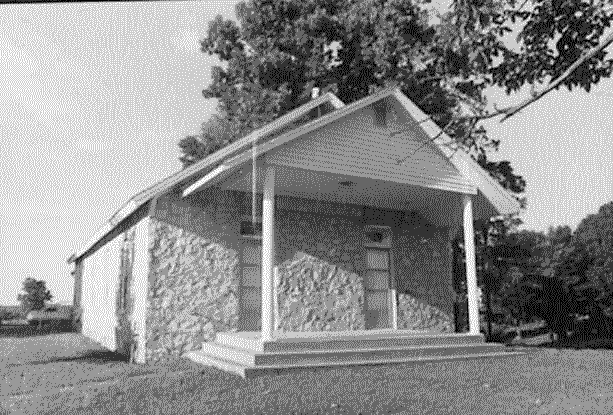
| Highland Baptist Church | 1939 | Organized on February 21, 1878, Highland Church worshipped in a poplar log structure from 1878 to 1939 when it was destroyed by fire. According to local lore the fire began when a tobacco field was being burned on March 9, 1939. During May 1939 the church met in an old school bus on the church property. The present building, erected for $1265, was dedicated on May 22, 1940. Perched atop a scenic hilltop, the church is constructed of native limestone and features a pedimented portico and the nostalgic two door entrance. Most rural churches have consolidated the two entrances into one centered door. |
|
| Hillview Baptist Church |
|
||
| Iva Baptist Church |
|
||
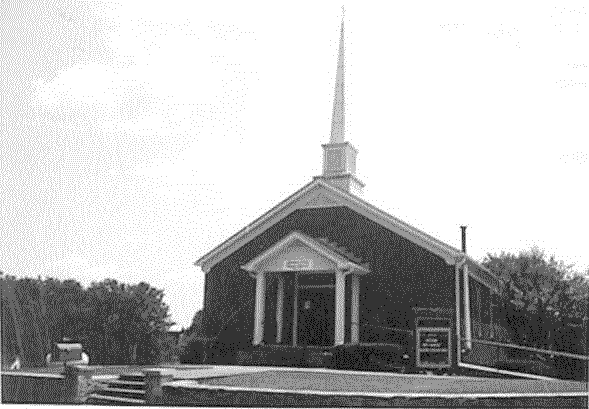
| Jackson Grove Baptist Church | 1937 | The Jackson Grove Church was organized in 1884 with seventeen members. The congregation met in homes and barns until a church was built in 1891. W.A. Criswell pastored Jackson Grove during the mid-1930s along with Woodburn Baptist and Oakland Baptist. Criswell later pastored First Baptist Church, Dallas, Texas, the nation's largest Southern Baptist church. In 1937 a fire destroyed the old building, and a new one designed by Harvey Settle was constructed for $1718. The present building has common bond masonry, a gabled portico, and an elegant traditional steeple. |
|
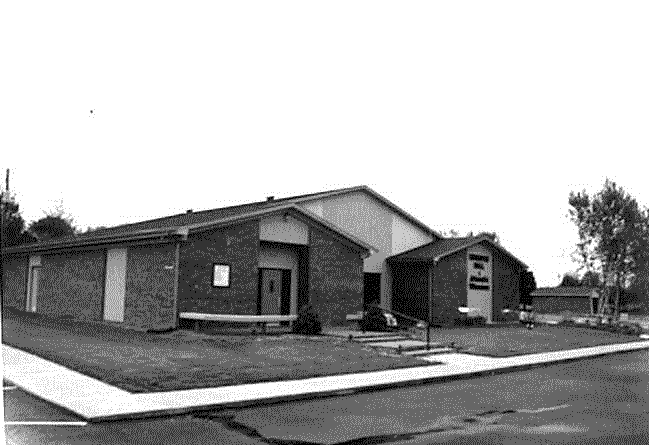
| Kingdom Hall Jehovah's Witness |
|
||
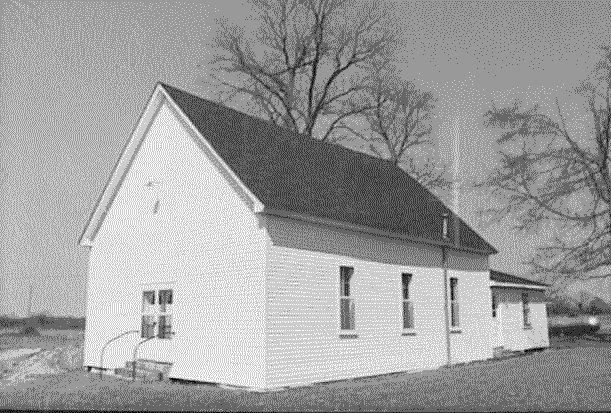
| Lewis Chapel United Methodist Church | ca. 1877 | The Lewis Chapel Church was founded in 1877 in present day Hadley. The church has recently added the front extension and steeple and discontinued the use of its outdoor toilets. An older rear addition is completely hidden when viewing the church from the front. The original rectangular sanctuary is still visible with its steep-pitched roof and its 4/4 symmetrical windows. The building has been sheathed in vinyl siding. An attractive nearby cemetery overlooks the rolling countryside of northwestern Warren County. |
|
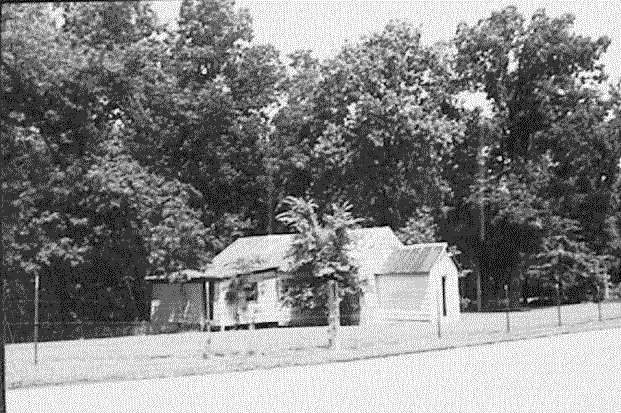
| Little Zion Church | Unknown | Because this church is abandoned, little is know about the congregation or its building. It now sits unused in a field. The original building was built on piers and features wide plank wooden siding and a tin roof. A gabled entrance was added at a later date, and perhaps the shed roofed addition was erected at the same time. The front door is constructed of vertical boards. |
|
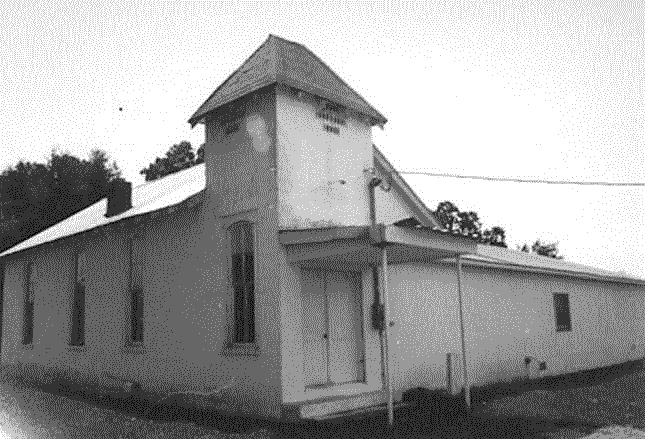
| Loving Union CME Church |
|
||
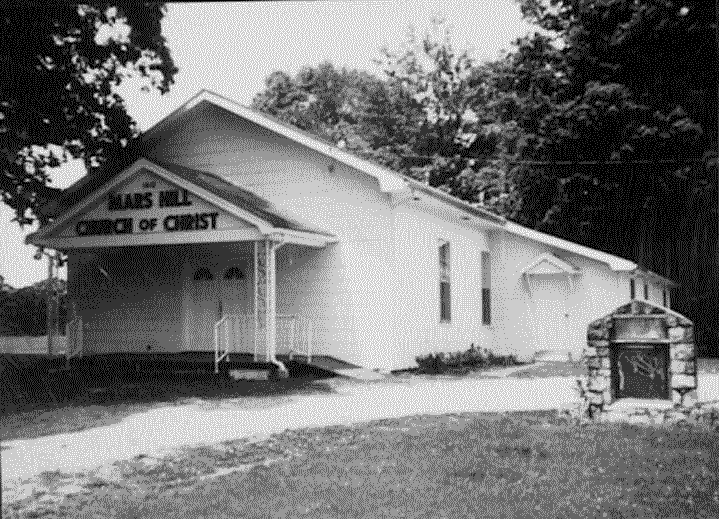
| Mars Hill Church of Christ |
|
||
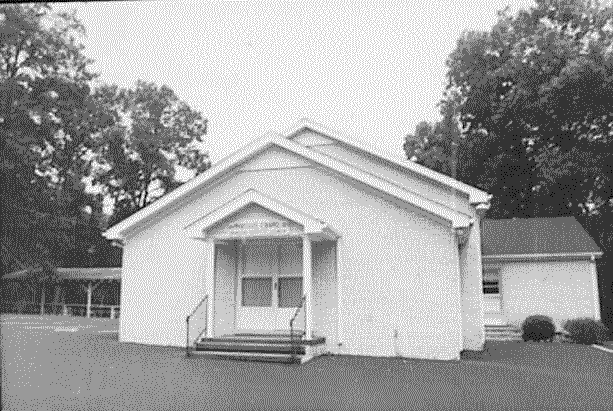
| Martha's Chapel General Baptist Church | 1923 | Martha's Chapel was constituted in March 1923. The church belongs to the Portland Association of General Baptists. The beige brick building was originally a frame structure. This church is another good example of telescoping, with three separate gable-fronted sections diminishing in size as they progress to the front of the structure. A more recent addition stretches across the rear of the building. A cemetery lies to the proper right of the church, and a gabled, open-air fellowship pavilion is situated behind the church with an old outhouse. This church lies directly across a rural highway from the site of the former Drake Church. |
|
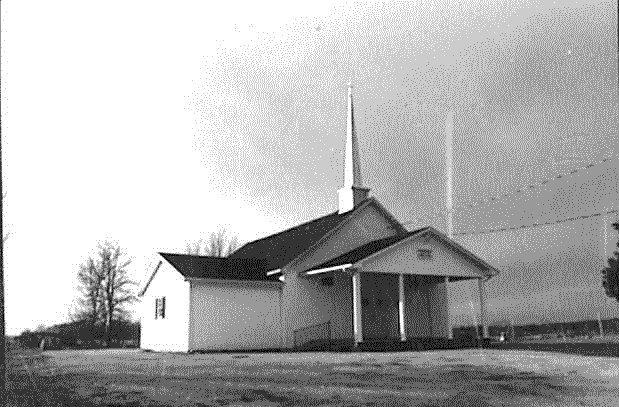
| Martinsville Missionary Baptist Church | 1890s | The Martinsville Church was established on April 14, 1893 in northeastern Warren County. This front gabled building has a centered double-door entrance protected by a large portico. The front doors boast square blue and purple, pearlescent stained glass with a centered clear diamond inset. Two small stained glass windows flank the front doors and feature an open Bible motif creating a rather unusual fenestration for a rural church. Two larger stained glass windows, which also use the open Bible, are located on the building's proper right hand side. The building is topped with a soaring cross-crested steeple. |
|
| Meadow Land Baptist Church |

|
||
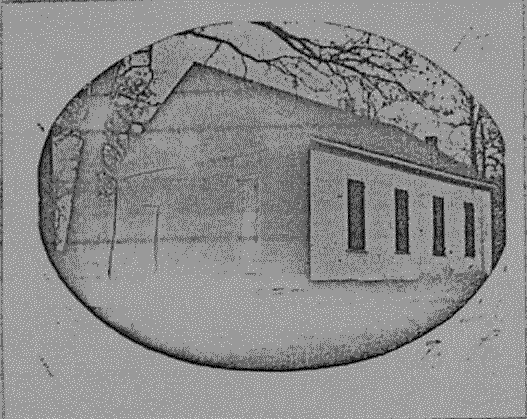
| Mizpah Presbyterian Church |
|
||
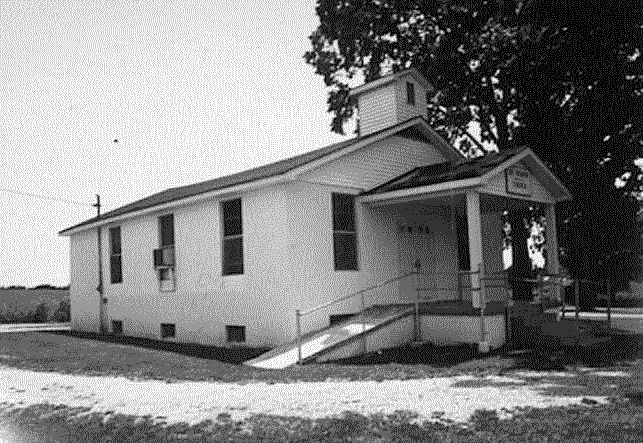
| Mt. Hebrew Cumberland Presbyterian Church |
|
||
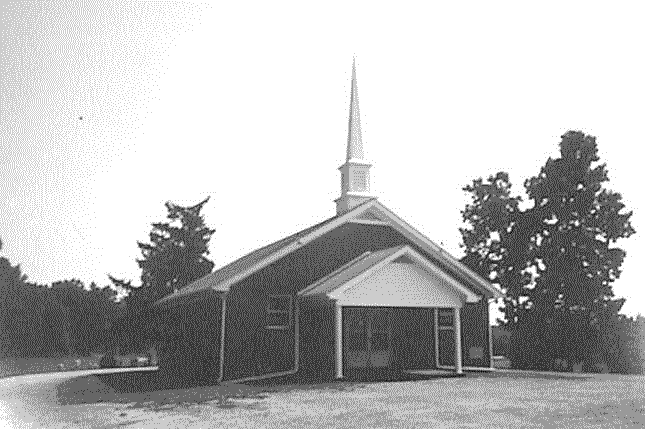
| Mt. Lebanon Missionary Baptist Church |
|
||
| Mt. Lebanon Presbyterian Church | 1924 | Mt. Lebanon's original building, which was constructed of poplar logs in 1856, was destroyed by a tornado in 1924. The present structure boasts a double-door entrance with paneled doors. A gabled portico is supported with wrought iron piers. The church features four 6/6 symmetrical windows and retains its tin roof. The outhouse is located to the proper right of the entrance and a cemetery is located behind the church. It is one of the few surviving Presbyterian congregations in the county. | |
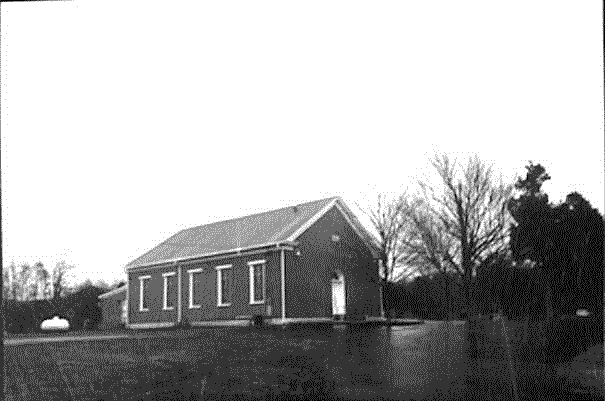
| Mt. Olivet Cumberland Presbyterian Church | 1845 | Organized in 1813 this congregation has the distinction of being the oldest Cumberland Presbyterian church in Warren County. Prior to construction of the present sanctuary in 1845, a log structure housed the congregation. The church's red bricks were fired less than two hundred yards from the present structure. This building represents a rare example of early brick ecclesiastical construction in Warren County, and was erected for around $1000. The front gable features cornice returns, applied molding at the roofline, a raking cornice, and a round arched entrance. The tall steeple is a recent addition to the structure. |
|
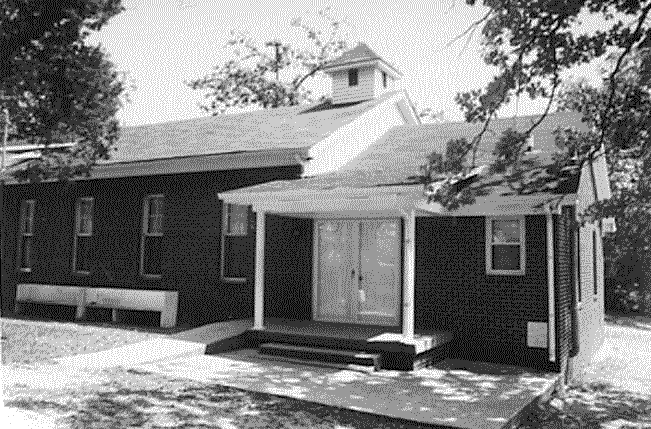
| Mt. Olla Baptist Church |
|
||
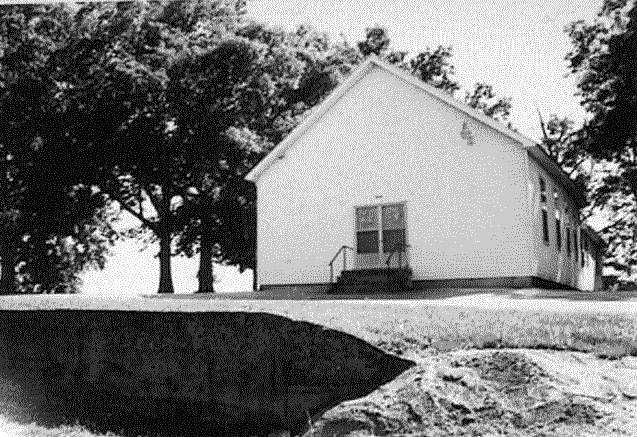
| Mt. Pisgah United Methodist Church |
|
||
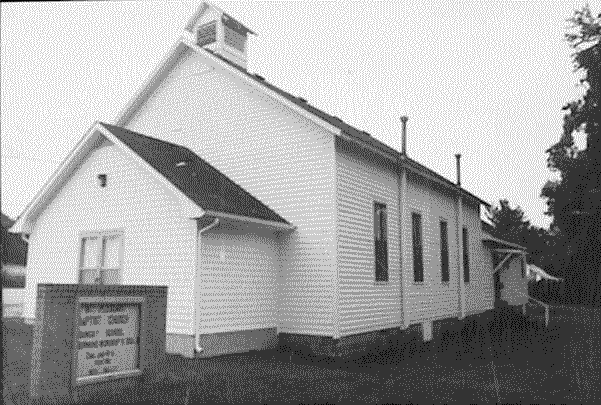
| Mt. Pleasant Baptist Church | Late 19th century | Although Mt. Pleasant's date of construction is unknown, its vernacular style and prominent features indicate it was constructed the last quarter of the 19th century. This is one of the few frame churches in the county that has not been covered with vinyl or aluminum siding. A recent gabled addition projects from the original front gable entrance. The original sanctuary has a raking cornice and thin pilasters at the corners. A gabled bell tower that is louvered on three sides tops the church. The sanctuary has 2/2 elongated windows with large, clear panes of glass. Each sash has one vertical mullion. |
|
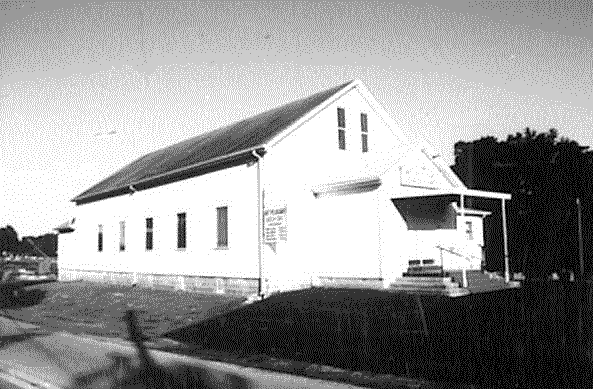
| Mt. Pleasant Church of Christ | 1890 | Several people from the Anna community went to hear the famed minister Alexander Campbell, preach near Smiths Grove in 1838. So moved by what they heard, they returned home and formed the Mt. Pleasant congregation. They constructed a log building for worship facilities. The log building was used until the present frame structure was erected in 1890. The front facade's most unusual features is the set of centered windows above the front doors. At the rear of the structure a pyramid roof indicates that a cupola once housed a bell, which was used to call parishioners to worship and to call men to dig graves in the church's ample cemetery. |
|
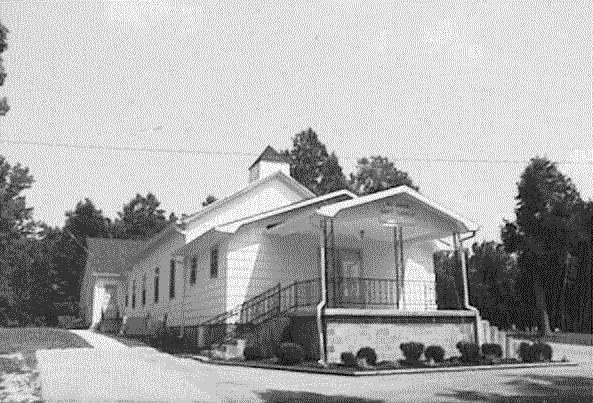
| Mt. Union Baptist Church | Late 19th century | The exact date of Mr. Union's construction is indeterminable, but certain features indicate that it was built in the later part of the 19th century. It has two additions which telescope out from the front of the sanctuary and a cross-axis addition at the rear. The sanctuary of this African American congregation houses four 6/6 double-hung windows and has a tin roof topped with a small pyramid-roofed bell cupola. The concrete and cinder block porch is protected by a gabled portico and is surrounded with a wrought iron balustrade. |
|
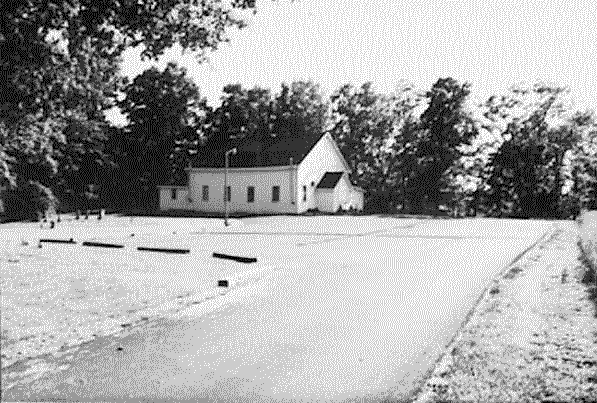
| Mt. Zion Church of Christ | ca. 1890s | This congregation was organized on October 11, 1852 with thirty-one charter members. It was originally called the Swan Creek Church of Christ, but the name was changed some time prior to 1892. The building was constructed of yellow poplar grown on the steep hillside adjacent to the meeting house. The foundation stones, steps, and mounting blocks were cut from the bluff behind the structure. William and Mary Brown worshipped at the Green River Union Meeting House, but a "falling out" over a doctrinal issue prompted he and several other congregants to build Swan Creek. Brown supposedly wanted the new structure to be larger than the Green River facility, thus Mt. Zion is four feet longer. |
|
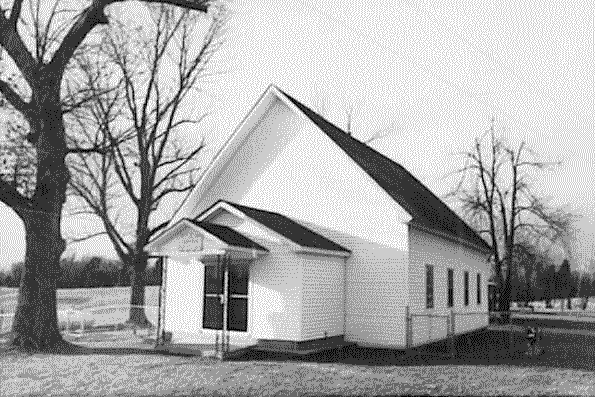
| Mt. Zion United Baptist Church | 1898 | This church was originally constructed as a Free Methodist church. It was built as the result of the "slight division" of the Flat Rock Methodist Church. Bill Elrod cut trees on his own property to furnish the lumber for this building. The sanctuary has a steep-pitched gabled roof. A front addition boasts double doors of glass which are protected by a gabled portico with wrought iron supports. The churchyard is fenced and contains a gabled picnic pavilion and a cemetery that was started in 1984. |
|
| New Gasper Baptist Church | Late 19th century | The New Gasper River Church was constituted in 1856. The front facade features a double-door entry with paneled doors housing brass push plates. The front entrance is protected by a gabled portico which features wooden piers and balustrade and latticework. The building's front gable displays a raking cornice and applied molding on the roofline. A large black cross is centered in the gabled end above the portico, and large black letters are used to identify the church. A cross-axis wing has been added to the rear of the building. |

|
| New Life Church of the Nazarene |
|
||
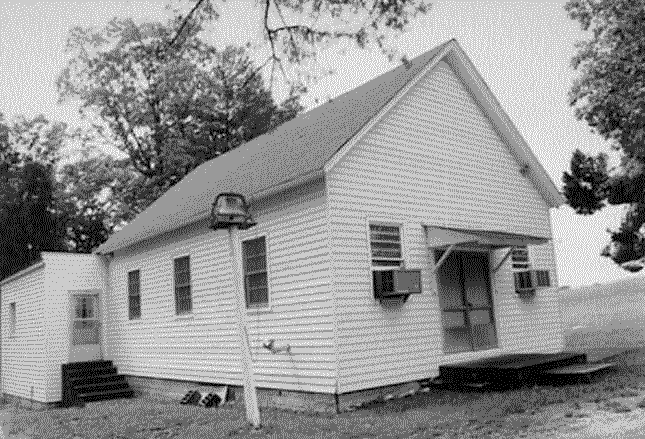
| New Salem Baptist Church |
|
||
| New Zion Baptist Church |

|
||
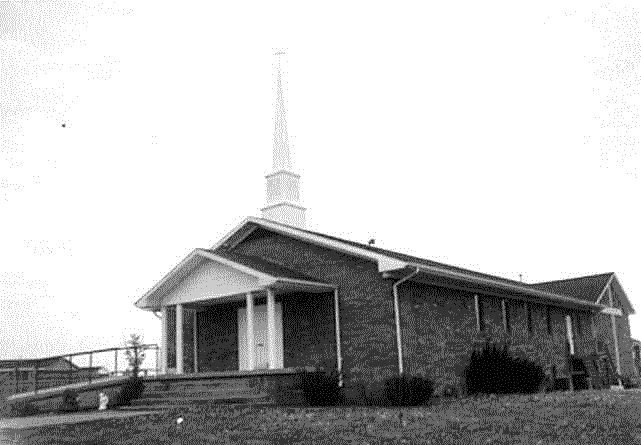
| Northside Freewill Baptist Church |
|
||
| Oak Forest Union Church | 1879 | W.S. and Martha Young deeded this land to the church on September 18, 1883. The deed indicates that the "Church House" was already standing and that it was also being used as a school. The deed also denied use of the land as a "burying ground," however the cemetery behind the church indicates a violation of that deed covenant. The church retains its two separate entrances, its tin roof, and its chimney. The building, which is constructed of poplar and oak logs, was sheathed in aluminum siding in 1962. The outhouse on the property is still necessary. The churchyard includes several large oak trees. | |
| Oakland Baptist Church | 1907 | This church displays many picturesque elements including stained glass Gothic arched windows, keystones above windows in the main entrance, and a standing metal seam roof. The beautiful three-story bell tower, attached to the corner of the building, acts as the church's entry, and features diamond paned windows, circular vents, and a steep-pitched pyramid roof with tin shingles. The 1983 education complex is an excellent example of a sympathetic addition to a historic structure. |

|
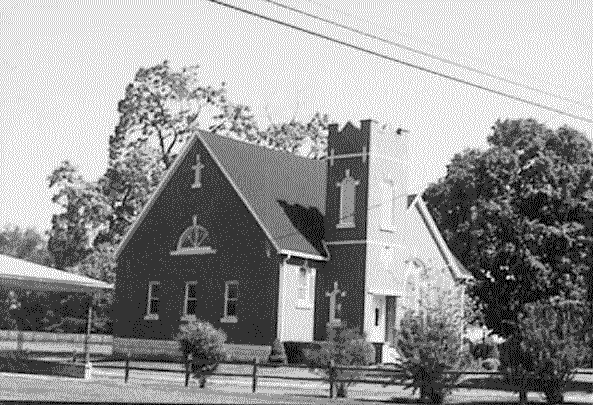
| Oakland Christian Church | 1924 | Oakland Christian Church was organized in 1835. Its present building is an exquisite example of masonry construction. The structure rests on a rough ashlar limestone foundation topped with a cut stone water table. The red brick is laid in common bond. The entrance is centered in a two-story bell tower. Above the entrance is a beautiful rounded arch filled with basket weave brickwork and topped with a limestone keystone. The bell tower is accentuated with limestone belt courses and a blocked Norman style roofline. The large front window with its intriguing masonry surround, limestone details, heavy mullions, and art glass make this a masterpiece. |
|
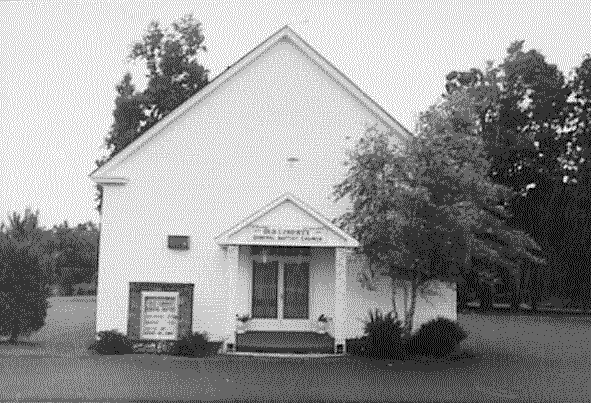
| Old Liberty General Baptist Church | 1916 | The Old Liberty congregation, organized in 1876, was once known as the Greenbriar Church. Beautifully maintained, this church is sheathed in white vinyl siding and has what appears to be a cinder block foundation. The front double-door entrance is centered in the front gable and is protected by a gabled portico supported with elaborate wrought-iron piers. The front gable features cornice returns and thin corner pilasters. Four symmetrical 1/1 windows are located on the sides of the church and hold clear glass panes. A gabled picnic pavilion is located behind the building. |
|
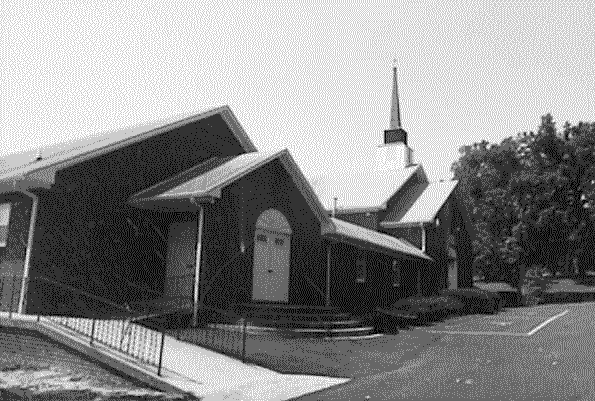
| Old Union Missionary Baptist Church | 1866 | Old Union is the oldest, continuous congregation in Warren County, having been constituted in 1795. Several denominations shared use of its first structure, a log building. An 1846 deed indicates a later building was constructed of brick. A frame sanctuary, built in 1866 and remodeled in 1897, has been incorporated into the present structure. Education space was added to the building in 1956, the vestibule and restrooms in 1960, and additional education rooms in 1965. Today the church is completely bricked. The front doors are topped with a beautiful stained glass transom that features an open Bible with a sword, the same motif used in the sanctuary's stained glass windows. |
|
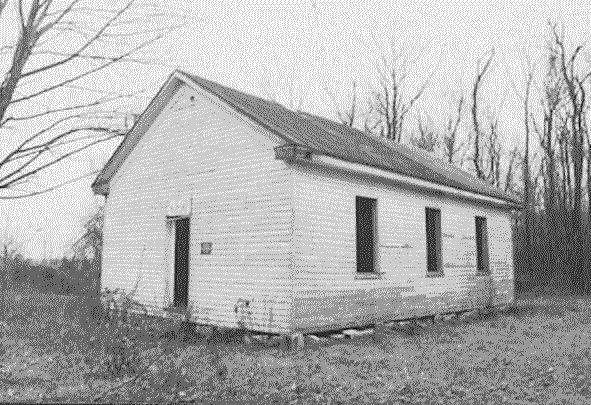
| Old Zion Baptist Church | Late 19th century | Little is known about this abandoned church near Simpson County. The building has a single front entrance. The clapboard siding is generally in good condition despite lack of maintenance. The front gable has a raking cornice with returning eaves. The original tin roof is still in place and the church rests on limestone piers. The building has three symmetrically placed window openings, but the window lights are missing. The off-centered rear door is constructed of vertical wood planks. A red brick common bond, brick chimney pierces the proper right roof. A small, unkempt cemetery is located behind the structure. |
|
| Penns Chapel Church of Christ | About 1897 | The land for this church was donated by Martin and Rhoda Wilson from a portion of their farm. In the deed they mention an old existing church to be torn down and a new one erected. The old church mentioned in the deed may have been John Sturgeon's, a methodist minister and the father of Rhoda Wilson. | |
| Pentecostal Church |
|
||
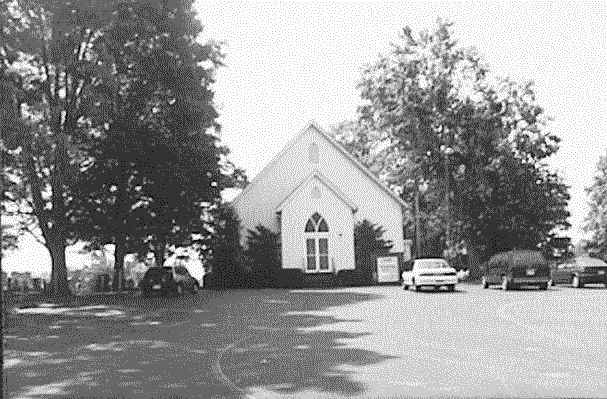
| Plano Baptist Church | 1897 | Plano Baptist Church was constituted in November 1839 with twenty-nine members. The church was formerly known as Union Church and worshipped as such until 1897. This white aluminum-sided building hosts beautiful Gothic arched windows filled with an aqua glass. The Gothic arch motif is used effectively in the entrance transom and the front facade's louvered vents. The double glass doors are centered in a projecting, front gabled addition, which is beautifully proportioned to the steep roofline of the main structure. The church property also includes an education facility, picnic pavilion, and a fenced cemetery. |
|
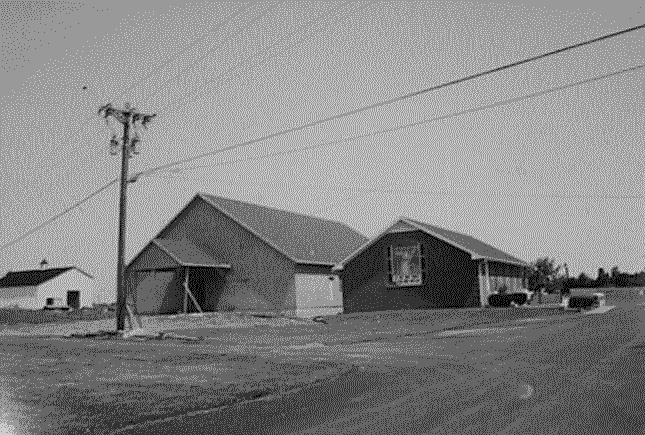
| Plano Community Chapel |
|
||
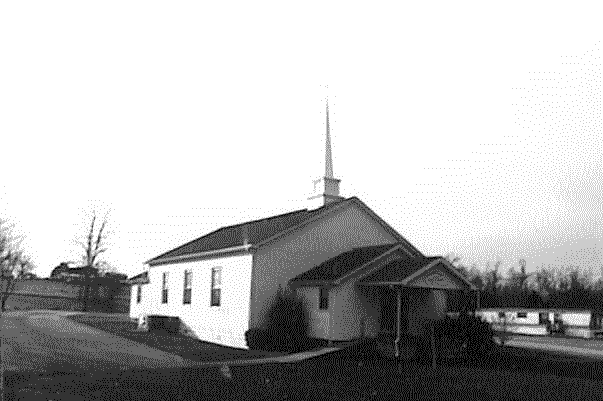
| Pleasant Grove Missionary Baptist Church | Late 19th century | This church was organized on February 6, 1868 with thirty-seven members. The sanctuary boasts a significant portico protecting the glass double doors. This church is another splendid example of telescoping, with two progressively smaller gabled additions to the front and one to the rear of the building. The attractive steeple sits on a louvered vented cupola. When the building was sheathed with white aluminum siding, one member quipped: "It's just like a lady trying to disguise her age by paint and cosmetics. It has been painted from time to time, and now has siding on the outside to preserve it." |
|
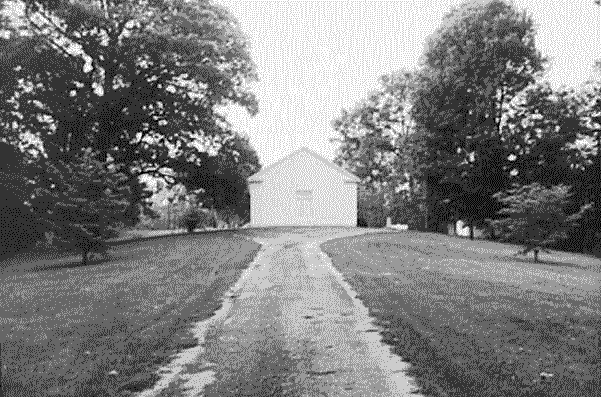
| Pleasant Hill Christian Church | Late 19th century | This congregation is beautifully sited on a rise between two sinkholes. A long, straight drive is the only approach to the building. The single double-door entrance is centered in the gabled end and boasts a large transom. The building's height is emphasized by its hilltop location. Building highlights include the original clapboard siding, graceful cornice returns, thin corner pilasters, and a deep raking cornice. Outhouses are still located on the property as well as a beautifully maintained cemetery in the rear. The churchyard is enhanced by a variety of mature trees. |
|
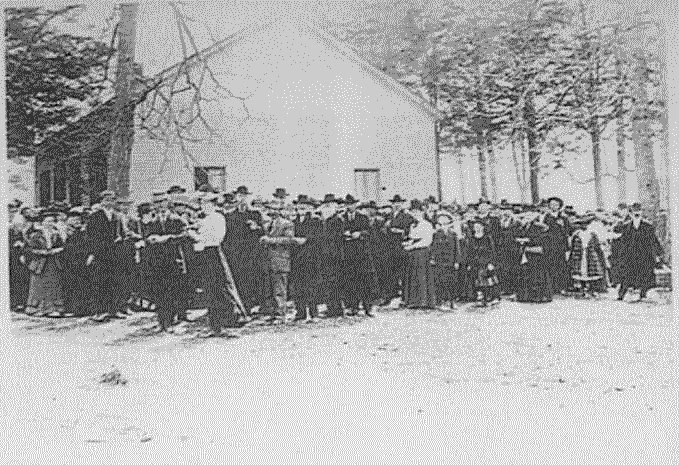
| Pleasant Hill Presbyterian Church |
|
||
| Pleasant View Baptist Church |
|
||
| Plum Springs Baptist Church |

|
||
| Prices's Springs Jackson Chapel |
|
||
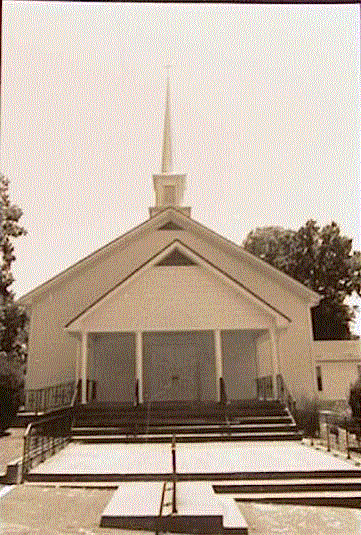
| Providence Knob Missionary Baptist Church | 1852 | Providence Knob is one of the oldest congregations in Warren County and is sometimes called the
"mother Church" because it has helped start at least five other congregations, including First Baptist
Church, Bowling Green. The church was established in September 1804 with nine charter members. The
worship facility is a commodious structure with three symmetrical purple and beige mottled stained
glass windows. The paneled double doors are centered under a significant gabled portico that is raised
from the parking level by a series of concrete steps. The front facade is crowned with a graceful
cross-crested steeple. By Irene Moss Sumpter Contributed By Allice Burns Reynolds |
|
| Rays Branch Church of Christ |
|
||
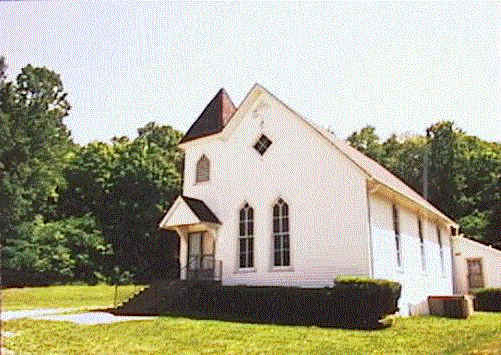
| Rays Branch United Methodist Church | 1901 | This congregation was founded in November 1897. They met in a store owned by John Manning who later gave the three acres the present church was built on. The structure's cornerstone was laid on Christmas Day 1899 and the building completed on October 11, 1901. John Starr, the chief carpenter, built one of the most picturesque churches in rural Warren County. The entrance is located in the off-center bell tower and has a cantilevered, gabled portico. The bell tower has a steep pyramid roof and boasts a stylized arched vent with louvers. The building's facade has two slightly off-centered windows with stylized Gothic arches, the same design used for the sanctuary's windows. |
|
| Richpond Baptist Church |
|
||
| Richpond Church of Christ | |||
| Richardsville Baptist Church |
|
||
| Richardsville Church of Christ |
|
||
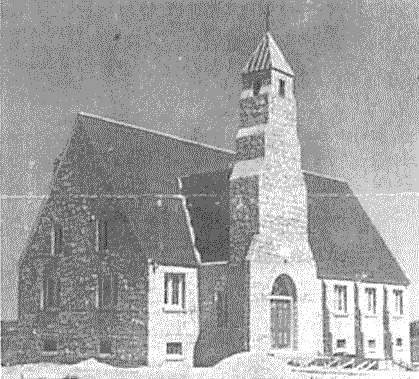
| Richardsville United Methodist Church | 1947 | A.R. Fink designed this English Gothic structure in 1943. His design was altered, but the cross-axis entrance and the significant bell tower were always planned for the structure. Built for under $10,000 the church boasts a wonderful crow-stepped bell tower that is capped with a tin pyramid roof crowned with a cross. The church features a severely steep-pitched roof and attractive casement windows. The sanctuary's exterior consists of local limestone and is ribbed with capped buttresses. This masterful structure hugs a busy thoroughfare and is a pleasing site to behold. |
|
| Riverside Christian Church |
|
||
| Rockfield Baptist Church |
|
||
| Rockfield Church of Christ |
|
||
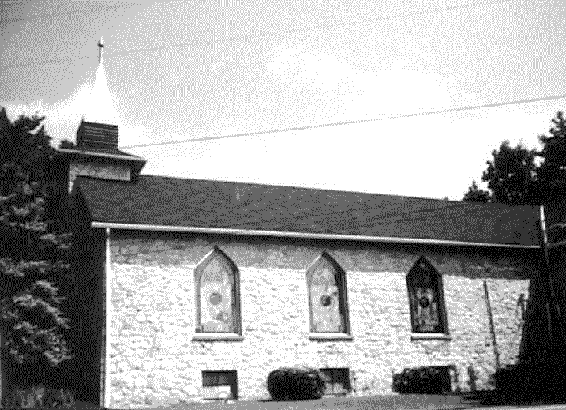
| Rockfield United Methodist Church | 1950 | Originally this congregation worshipped with the Cumberland Presbyterians at Pleasant Hill, but in 1890 the Methodists sold their share of that "union church" and erected their own building in Rockfield. In mid 1950 the present structure was constructed of polychrome rock from the area. The church is built on a small rise and seems to soar above the nearby street. The double doors are centered in a projecting bell tower which is topped with a highly unusual, vernacular metal steeple. Two large one-paned windows that protect stained glass scenes of Jesus kneeling and praying and the Last Supper flank the front entrance. |
|
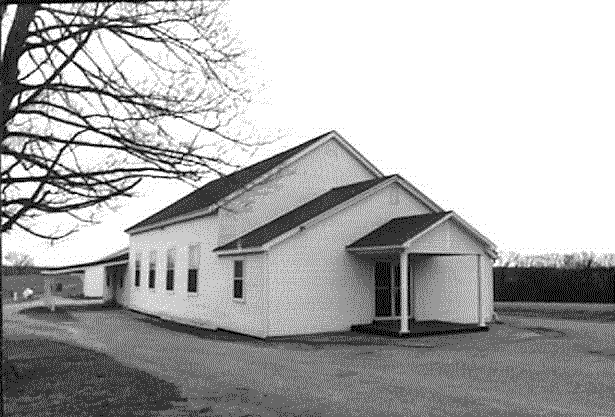
| Rocky Springs Missionary Baptist Church | Late 19th century | This white aluminum-sided church is approached down a tree-lined drive. Like many other churches in the county, Rocky Springs has had significant additions to the front and the rear of the building. The front of the structure features a low-pitched wide addition that houses the centered double glass doors, which are protected by a gabled portico supported with fluted metal columns. The original sanctuary features a steep-pitched roof, raking cornice, boxed soffitts, and four 12/12 double-hung windows on each side. The church has a shed roof porte cochere at the proper right rear. |
|
| Rolling Springs United Methodist Church | 1887 | This church was organized in March of 1897. Eighty-five people participated in raising the poplar logs for the new building later that year. Like many of the older churches in the county, the building had a dividing rail between the center seats. This allowed the women and children to seat on one side and the men on the other. The young people referred to the rail as the "teasing pole." The weatherboarding was added near the turn of the century. The front gable has attractive cornice returns, pilasters at the corners, applied molding on the roofline, and a raking cornice. | |
| Sand Hill Seventh Day Adventist Church |
|
||
| Scottsville Road Baptist Church |
|
||
| Smiths Grove Baptist Church | 1898 | Constituted in 1812, this church is one of the older congregations in the county. Their first building was a log structure, but in 1871 they constructed a "union church" with the Presbyterians. The present building is an architectural gem and was designed by talented Bowling Green architect, Creedmore Fleenor. The building is Gothic Revival in styling and boasts thirty-two stained glass windows. The functioning bell tower features beautiful louvered vents, limestone detailing, a castellated roofline, and buttressed corners. Graceful limestone detailing outlines the large windows. The beautiful standing seam roof with copper finials enhances the buildings artistic effect. |
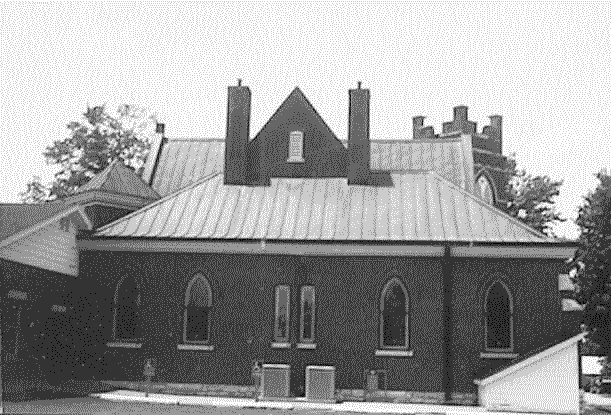
|
| Smiths Grove Christian Church | 1900 | The Smiths Grove Christian Church was organized in October 1895 and built the present building soon thereafter. The entrance is sheltered by a gabled portico that is raised a few steps above ground level. To the entrance's proper left is a large projecting bell tower with vents at the top, but the aluminum siding obscures the original vent design. The bell tower's facade has two centered 1/1 windows stacked one atop the other. A similar set of windows flanks the entrance on the proper right side. Each of the sanctuary's eight windows has Gothic arches and contains pebbled glass. Because this building abuts the street, its soaring roof gives it a distinctive vertical thrust. | |
| Smiths Grove Church of Christ |

|
||
| Smiths Grove Presbyterian Church | 1889 | This church organized in 1834 and used a log house for worship facilities until 1871 when it joined the Baptists in building a commodious "union" structure. In 1889 the congregation sold their interest to the Baptists and constructed the present building. The structure's gabled front has a lovely cornice of drip corbeling. A large stained glass window is centered in the front gable at ground level. The bell tower, which once hosted a significant steeple, features an entrance on two sides with stained glass Gothic transoms. The sanctuary's windows rest between double-arched recessed panels divided by limestone capped buttresses. |
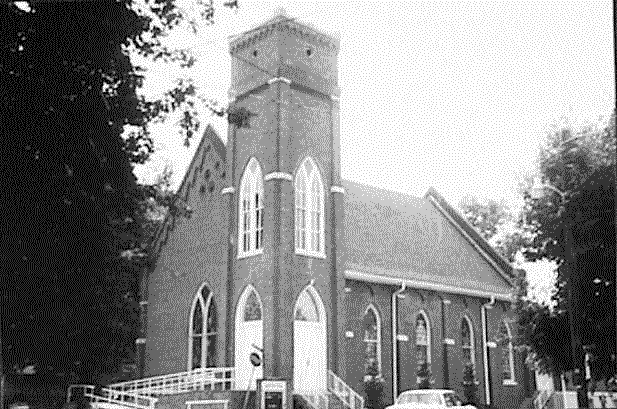
|
| Smiths Grove United Methodist Church | 1897 | This church organized as a Methodist Episcopal Church South in the early 1870s. The present building is constructed of rough ashlar limestone from the area. The projecting bell tower contains two entrances topped with Gothic arched transoms. The bell tower's top level features louvered vents and a pyramid roof capped with a tin finial. The gabled facade hosts a large stained glass window. The sanctuary's windows all feature spectacular stone lintels and are delineated by stone buttresses. The facade's proper right corner features an unusual chamfered corner which contains another entrance. |
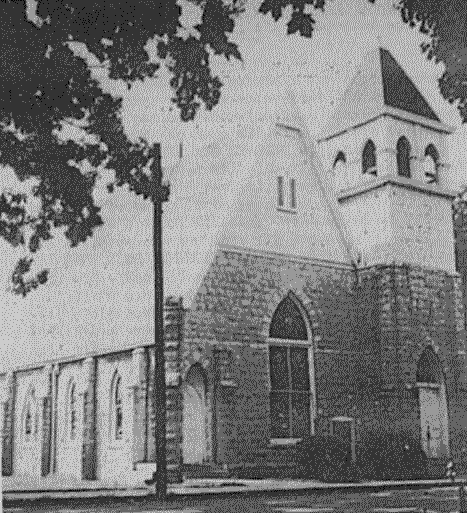
|
| St. Paul AME Church | Early 20th century | St. Paul African Methodist Episcopal Church has served Woodburn area African Americans for many years. The long church sanctuary retains its original wood siding and is pierced by three 6/6 double-hung windows. A shed roofed addition has been juxtaposed to the rear of the church. Bathrooms have been added to either side of the projecting bell tower. The unusual bell tower is square and includes large louvered vents on each side at the top. The tower's pyramid roof features flared eaves and is topped with a highly unusual tin steeple. |
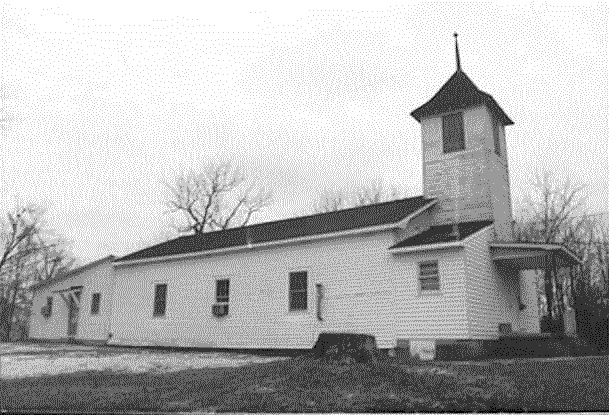
|
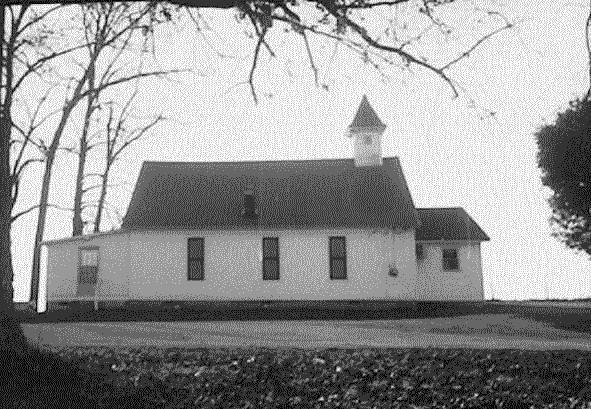
| Stoney Point Baptist Church | Late 1860s | African Americans organized this church immediately after the Civil War. The facade is marred somewhat by a large front addition with an unusual roofline, but the details of the original sanctuary, which was moved across several fields to its present location several generations ago, are still apparent. The gabled facade is sheathed in siding, but it once boasted applied molding at the roofline and a deep raking cornice. The louvered vent is part of the original construction. The church's most important feature is the bell tower with louvered vents on two sides and a pyramid roof with flared eaves supported with decorative brackets. |
|
| Three Forks Church of Christ | |||
| Trinity Free Will Baptist Church |
|
||
| Valleyview Missionary Baptist Church |
|
||
| Wesley's Chapel or Morton's Branch |
|
||
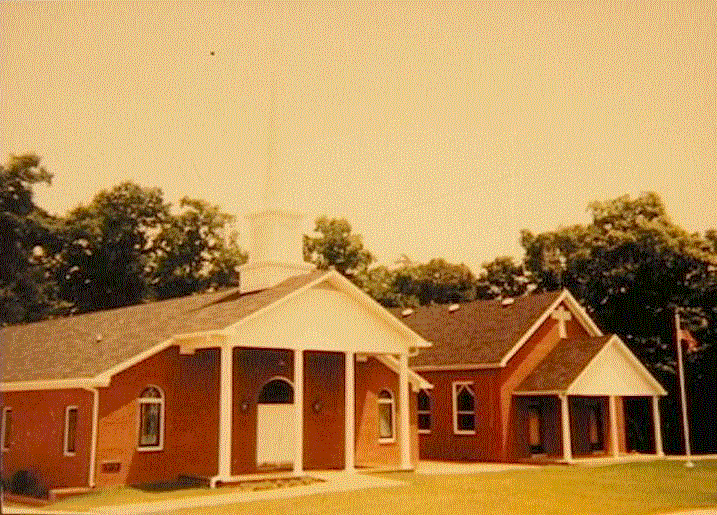
| White Stone Quarry Baptist Church | 1885 | The Providence Knob Church helped organize this congregation in 1876 with thirty-five members. The first church was located near the White Stone Quarry. A log church constructed in 1885 is still being used; it was eventually clad with weatherboard and finally bricked in 1968. The bell located to the proper left of the front portico was originally located atop the building. The structure still has its two front doors, which are covered with a large gabled portico supported by fluted columns. A cross created with beige bricks was placed in the front gable's masonry. The church has an amazing picnic shelter complete with concrete floor and oversize fan. The new sanctuary is located to the proper right of the old building. |
|
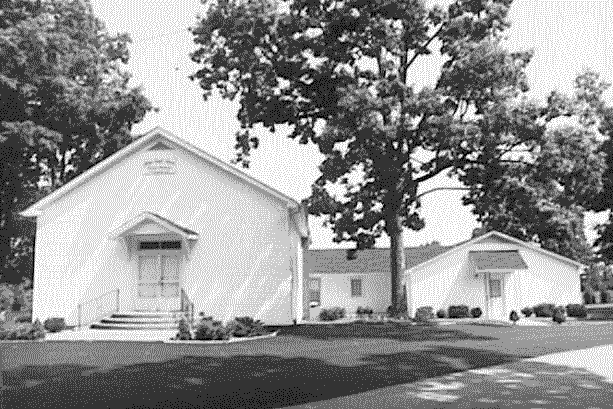
| White's Chapel United Methodist Church | 1902 | This attractive white church is located near Allen County. The gabled facade has applied molding at the roofline and a slight overhang. A triangular louvered vent is centered in the gable's apex. A cantilevered gabled portico protects the double front doors that are topped with transoms. Because the church's front section contains different sized windows, it is possible that it constructed later. The attractive aluminum steeple is a recent addition. The property boasts a number of of mature trees and across the street is a well-maintained fenced cemetery. |
|
| Woodburn Church of Christ |
|
||
| Woodburn Methodist Church | |||
| Woodburn Baptist Church | 1897 | This church was constituted on May 26, 1867, less than four months after the town itself was incorporated. Prior to the building's construction, the church owned 1/4 interest in a "union church" that was located near the present Woodburn Cemetery. The Lewis Lumber Company completed the buildings attractive front addition in 1922. The addition features double 1/1 casement windows with attractive window surrounds, but surely the church's most important architectural feature is the two-story pedimented portico which includes a full entablature and is supported by fluted Doric columns. A large paned transom with frosted details including the church's name tops the double-door entrance. |